China Politics · Military Affairs · Anti-Corruption
Wei Fenghe and Li Shangfu Sentenced: China’s Military Purge and Anti-Corruption Campaign Explained
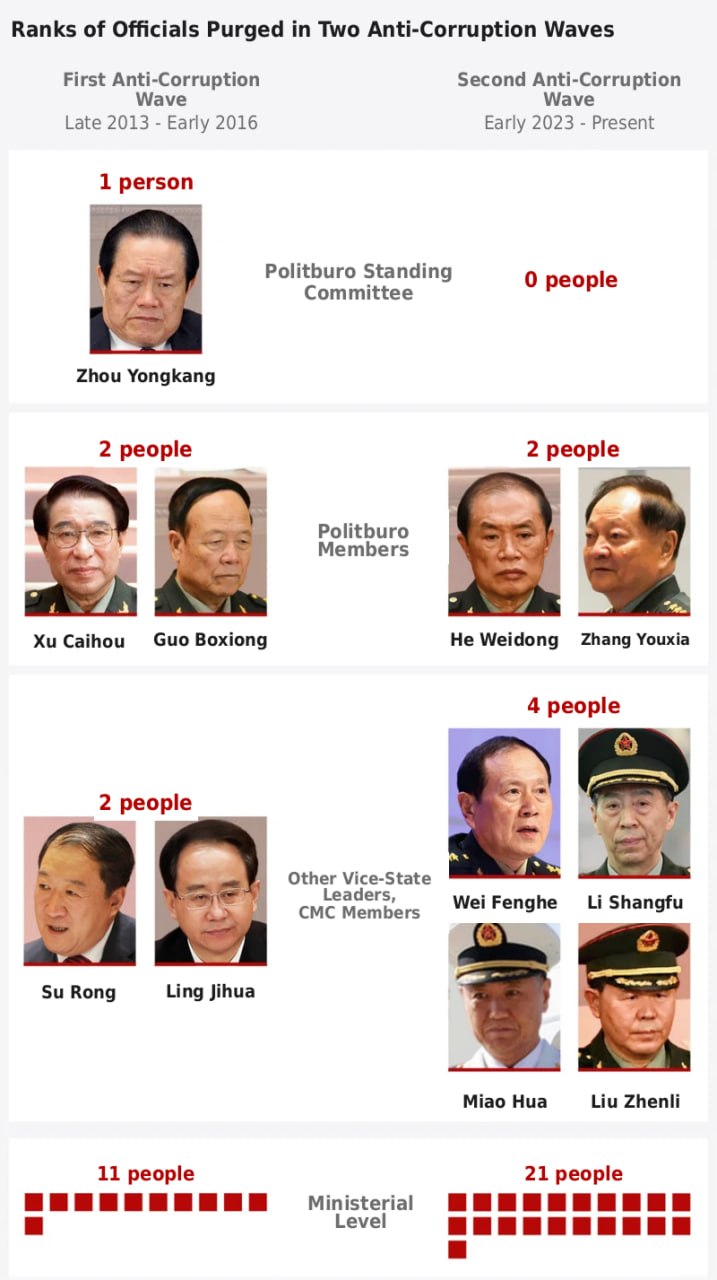
China’s military anti-corruption campaign has entered a new and highly significant phase after two former defense ministers, Wei Fenghe and Li Shangfu, received suspended death sentences in major corruption cases.
What Happened to Wei Fenghe and Li Shangfu?
China’s military anti-corruption campaign has moved into a severe judicial phase. According to Chinese state media, a military court on May 7, 2026, handed down first-instance verdicts against two former Chinese defense ministers: Wei Fenghe and Li Shangfu.
Wei Fenghe, a former member of the Central Military Commission, former State Councilor, and former Minister of National Defense, was convicted of accepting bribes. Li Shangfu, who also served as a Central Military Commission member, State Councilor, and Minister of National Defense, was convicted of both accepting and offering bribes.
Both men were sentenced to death with a two-year reprieve, deprived of political rights for life, and had all personal assets confiscated. The verdict also stated that after their suspended death sentences are reduced to life imprisonment, they will remain imprisoned for life without the possibility of sentence reduction or parole.
What Does a Death Sentence With a Two-Year Reprieve Mean in China?
Under China’s legal system, a death sentence with a two-year reprieve usually does not mean immediate execution. In most cases, if the convicted person does not commit further serious offenses during the reprieve period, the sentence is reduced to life imprisonment.
However, in major corruption cases, Chinese courts can impose life imprisonment without the possibility of parole or sentence reduction after the two-year reprieve period ends. This makes the punishment extremely severe while stopping short of immediate execution.
Why the Wei Fenghe and Li Shangfu Cases Are So Important
The significance of these cases lies not only in the corruption charges, but also in the seniority of the two men involved. Both Wei Fenghe and Li Shangfu once held one of China’s most prominent military posts: Minister of National Defense.
Wei served as China’s defense minister from 2018 to 2023. Li succeeded him in March 2023, but his tenure was unusually short. He disappeared from public view only months later and was formally removed from his positions in October 2023.
Their punishment sends a clear political message: even former defense ministers and members of China’s highest military leadership body are not immune from prosecution.
The Earlier Expulsion From the Communist Party and Military
The downfall of Wei Fenghe and Li Shangfu had already been foreshadowed. In June 2024, the Chinese Communist Party announced that both men had been expelled from the Party and that their cases had been transferred to military prosecutors.
Wei was accused of seriously violating political discipline, using his position to benefit others, and accepting huge sums of money and property. Official statements also accused him of severely damaging the political environment of the military.
Li Shangfu’s case involved both bribery and the offering of bribes. Chinese authorities said he used his position to seek improper benefits for himself and others, accepted large amounts of money and property, and offered bribes to gain improper advantages. He was also expelled from the military and stripped of his rank as general.
The Rocket Force, Weapons Procurement, and Defense Equipment Connection
In recent years, China’s military anti-corruption campaign has focused heavily on the People’s Liberation Army Rocket Force, weapons procurement, and defense equipment systems.
This context makes the cases of Wei Fenghe and Li Shangfu especially sensitive. Wei spent much of his career in the Second Artillery Force and later the Rocket Force. Li previously headed the Central Military Commission’s Equipment Development Department.
These areas are strategically important because they involve China’s missile forces, nuclear and conventional deterrence capabilities, and massive military procurement budgets.
As a result, the cases against Wei and Li are not simply personal corruption scandals. They also point to deeper problems within China’s military governance, procurement system, and command structure.
Xi Jinping’s Military Purge and Control Over the PLA
Since 2026, the purge within China’s military has continued to expand. Senior officers from different branches of the People’s Liberation Army have reportedly been removed from their posts, reflecting an ongoing effort by Xi Jinping to strengthen political loyalty and tighten control over the armed forces.
For Beijing, the heavy sentences against Wei Fenghe and Li Shangfu serve as a strong warning to the military. The message is clear: even former defense ministers and Central Military Commission members can face the harshest punishment if accused of corruption.
For outside observers, however, the repeated downfall of senior generals also highlights serious internal tensions within the PLA, especially in areas related to weapons procurement, the Rocket Force, and political loyalty.
What This Means for China’s Military Modernization
In the short term, China’s anti-corruption campaign may help Xi Jinping further consolidate control over the military. Removing senior officers accused of corruption can reinforce discipline and strengthen political obedience inside the armed forces.
But in the long run, frequent purges at the top of the military could also affect morale, command stability, and the pace of China’s military modernization.
The sentencing of Wei Fenghe and Li Shangfu is therefore more than the conclusion of two corruption cases. It is a key symbol of the changing power structure inside China’s military, the political use of anti-corruption campaigns, and the broader transformation of China’s defense governance.
Key Takeaways
- Wei Fenghe was convicted of accepting bribes.
- Li Shangfu was convicted of accepting and offering bribes.
- Both former defense ministers received death sentences with a two-year reprieve.
- The cases mark a new judicial phase in China’s military anti-corruption campaign.
- The purge highlights problems in the PLA’s Rocket Force, procurement system, and defense equipment sector.
- The verdicts strengthen Xi Jinping’s warning to senior military officials.
FAQ: Wei Fenghe, Li Shangfu, and China’s Military Purge
Who is Wei Fenghe?
Wei Fenghe is a former Chinese defense minister, former State Councilor, and former member of the Central Military Commission. He also had deep career ties to China’s missile forces.
Who is Li Shangfu?
Li Shangfu is a former Chinese defense minister, former State Councilor, and former member of the Central Military Commission. He previously led the Central Military Commission’s Equipment Development Department.
What crimes were Wei Fenghe and Li Shangfu convicted of?
Wei Fenghe was convicted of accepting bribes. Li Shangfu was convicted of both accepting and offering bribes.
Why does this matter for China’s military?
The sentencing shows that China’s military purge has reached the highest levels of the PLA and has moved beyond disciplinary punishment into severe judicial sentencing.
How is this connected to the Rocket Force?
Wei Fenghe had long-standing ties to China’s missile forces, while Li Shangfu was linked to defense equipment and procurement. These areas have been central to recent PLA anti-corruption investigations.
评论
发表评论